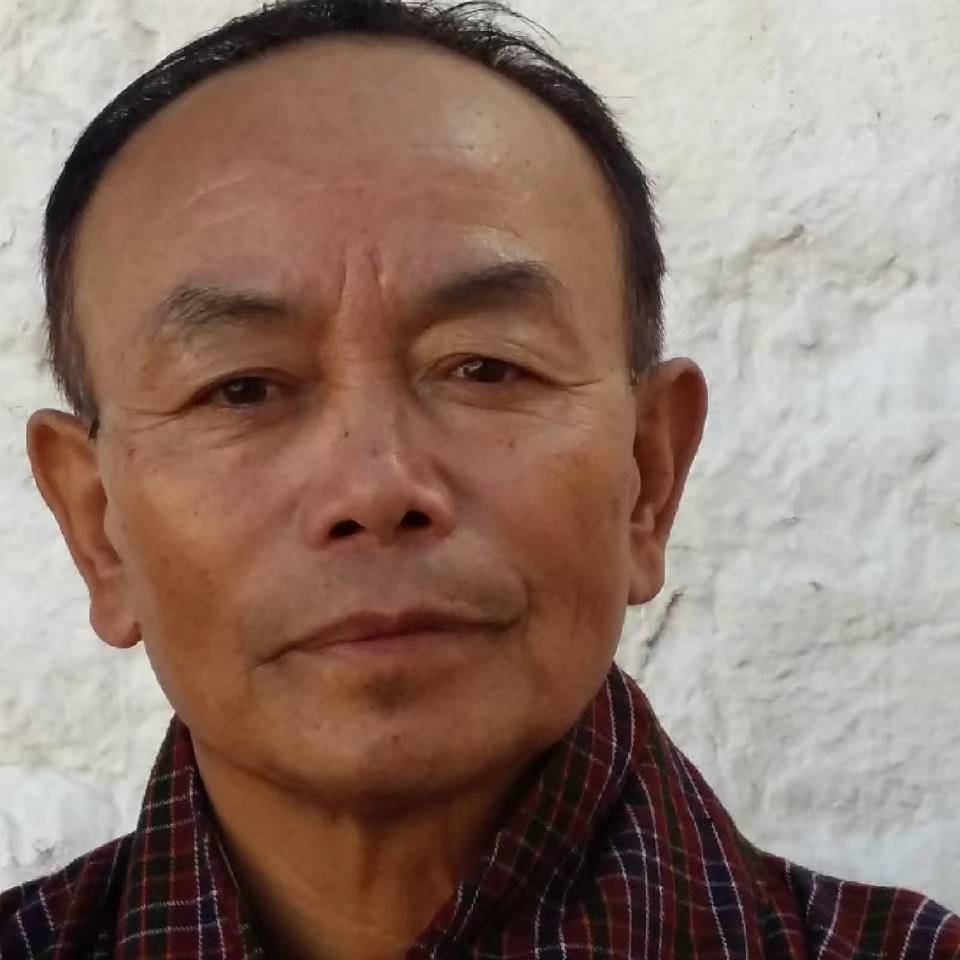
On this Guru Purnima, my heart turns with deep gratitude to a very special teacher from my childhood, Sir B. K. Jha.
Today, Wednesday, 29 July 2026, marks Guru Purnima, the full moon day of Ashadha in the Hindu calendar, a day traditionally dedicated to honouring gurus, and now, more broadly, all those mentors and teachers who shape our lives with wisdom, care, and guidance. It feels only right that on such a day, I pay tribute to one of the people who quietly changed the course of my life.
Sir B. K. Jha came from India as a young teacher to Bidung Primary School in 1987 to teach us Science. Bidung, in those days, was truly remote—a few hours’ walk from the nearest road at Lungten Zampa in Trashigang. It was a village far removed from comfort and convenience.
Proper accommodation was scarce. Toilet facilities were basic. Life was hard.
Looking back now, I often wonder what it must have taken for a young man from India to leave his home and come to such a place, to live among strangers, in unfamiliar conditions, simply to teach village children in rural Bhutan. There was sacrifice in that decision - real, human sacrifice; and we, as children then, understood very little of it.
At that time, I was a Class 4 student in the boarding school. Because he was new, one of my teachers, Sir Ugyen Wangdi, asked me to help him from time to time with simple household tasks like making fire and helping with cooking. Yes, those days, cooking was mostly done using firewood, and sometimes on kerosene stove.
For us students, such chances were welcome, because teacher-shared meals were often tastier and more filling than our regular boarding food. Those were not easy years. Food was often poor in quality and never quite enough for growing children. Home was far away, and childhood had its own silent hardships.
It was in those small, ordinary moments that a bond began.
Sir Jha was young, energetic, talkative, and full of life. He was enthusiastic in the classroom and playful outside it. I still remember how he tried to introduce us to cricket, a completely new game to us then.
He did not just teach lessons from books; he brought with him warmth, curiosity, laughter, and a wider world. Later, he even brought his newly wedded wife to Bidung, and their first daughter was born while they were serving there. When I think of that now, I feel even more respect - this was not only a young teacher doing his duty, but a young family building their life in one of the most remote corners of Bhutan.
 |
| Sir Jha and his wife. More recent picture, not from Bidung days. |
Sir Jha did something else for me that I can never forget.
I was the topper in Class 4, and he strongly believed that I was ready for more. He kept insisting to the headmaster and the other teachers that I should be allowed to skip Class 5 and move directly to Class 6. He argued that Class 4 was too easy for me and that I was capable of doing better. Eventually, the headmaster had relented, but on the condition that I study the Class 5 books during the winter vacation and sit for a test when I returned in March 1988.
So I went home for the winter with a bundle of Class 5 books and a difficult task before me. In a farming village, without educated seniors nearby to guide me, studying alone was not easy. Still, I tried. I returned prepared, yet scared, to face the test. But when school reopened, I was admitted directly to Class 6 without even having to sit for it.
Looking back, I know that was an extraordinary act of trust. It could have gone wrong. But it did not. I went on to top Class 6 as well, and perhaps that proved that Sir Jha had seen something in me correctly, long before I could fully see it in myself. I remain grateful to all my teachers and the headmaster for that opportunity, but I carry a special gratitude for Sir Jha, because he was the one who kept championing me, pushing for me, and believing in my potential with such conviction.
 |
| Sir Jha with Sir Kishore Gurung, the first Bhuatnese national headmaster of Bidung School appointed in 1988. Till then, all headmasters were Indian. |
There is another memory of him that has remained vivid in my mind for nearly four decades.
During the summer break of 1988, he took me with him to Guwahati. We did not even inform my parents in advance, fearing they might not allow me to go. For a village boy like me, it was my first encounter with a big city, and it opened my eyes in unforgettable ways. I saw and used a lift for the first time. I watched the 1988 Seoul Olympics on television. I visited Don Bosco School, the zoo, and the railway station. At the station, I remember being deeply moved by the sight of children picking discarded food scraps from garbage bins. That image stayed with me. It was one of my first stark lessons about the inequalities of the world. In taking me to Guwahati, Sir Jha did not just take me on a trip, he expanded my horizon.
Later, I moved to Khaling for Class 7, and Sir Jha was posted to Yonphula Primary School. I visited his family there too. By then, he was no longer only my teacher. He had become like an elder brother to me.
In 1994, he returned to India for good, and life, as it often does, carried us in different directions.
After Class 12, I received a scholarship to study engineering in Australia. Four years passed before I returned. Then work began at Bhutan Telecom in 2000, and time kept moving. But even as the years passed, I often found myself wondering how Sir Jha was doing. I searched for him online many times, but without success. Meanwhile, I had taken to blogging and writing, leaving my own small footprints on the internet. One day, by grace and good fortune, he found those footprints—and through them, he found me.
 |
| King's Birthday Celebration in Bidung School, 1980s. |
That reconnection was a joy.
Then, in 2014, during a visit to India, I was finally able to meet Sir Jha again in Bangalore, where he was teaching in a high school. I visited his home and had the happiness of meeting his family. Since then, we have remained in touch. Every now and then, he surprises me with a video call, and we chat with the same warmth and ease that only a genuine bond can preserve across years, distances, and changing lives.
Some teachers teach a subject. Some teachers teach a class. And a few rare ones touch a life so deeply that their influence never fades. Sir B. K. Jha is one of those rare teachers in my life.
On this Guru Purnima, I bow my head in respect and gratitude to him and to Madam as well. Thank you, Sir, for coming so far from your home to ours. Thank you for enduring hardship so children like us could dream beyond the boundaries of our village. Thank you for believing in me, for encouraging me, for opening doors in my mind and in my life. Thank you for the affection that made a teacher feel like family.
I wish Sir Jha, Madam, and their children continued good health, peace, and happiness.
 |
| Teachers' wives. Sir Jha's wife is 3rd from left. Late 1980s |
 |
| Class photo of my class, probably in 1982, when I was in LKG. I am second in second row from the right. |